
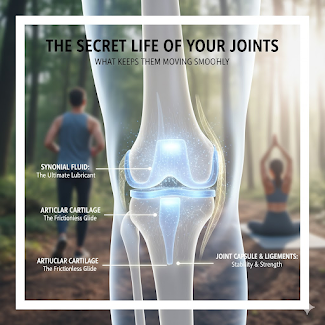
🧩 What Are Joints?
Joints are the connecting points where two or more bones meet.
They act like hinges, pulleys, and pivots that help your body move in different directions. From your shoulders that rotate freely, to your knees that bear your weight — every joint has a special design to make movement effortless.
💧 Synovial Fluid – The Natural Lubricant
Inside most joints, there’s a special liquid called synovial fluid — often called your body’s “joint oil.”
It’s a slippery substance that reduces friction and keeps bones from grinding against each other. This smooth fluid makes your movements silent, easy, and pain-free.
But when inflammation or injury reduces this fluid, movements can become stiff and painful — that’s when your joints start asking for attention.
🦴 Cartilage – The Shock Absorber
Cartilage is a smooth, flexible tissue that covers the ends of your bones.
It acts like a cushion, absorbing the shock every time you jump, climb stairs, or run.
Over time, wear and tear, injury, or age can make the cartilage thin — leading to joint pain, stiffness, or arthritis. Once it wears away, the bones start rubbing together, causing discomfort.
💪 Muscles and Ligaments – The Body’s Support System
Your joints can’t work alone — they rely on muscles and ligaments to stay stable.
Strong muscles reduce the pressure on your joints, while ligaments hold bones in place during movement.
Regular exercise, stretching, and proper posture are key to keeping your joints supported and injury-free.
🥦 The Role of Nutrition in Joint Health
What you eat directly affects how well your joints function.
Here are some foods that help keep them healthy:
🐟 Omega-3 rich foods (like salmon or flaxseeds) – reduce inflammation.
🥛 Calcium and Vitamin D – strengthen bones and cartilage.
🥕 Vitamin C & E – protect joints from oxidative stress.
🍒 Antioxidants – help repair wear and tear naturally.
A balanced diet ensures your joints stay strong and flexible for years to come.
🧘 Move It or Lose It
Joints are meant to move — and they stay healthy only when they do.
Simple activities like walking, swimming, or yoga help keep joints flexible and maintain circulation of nutrients in the cartilage.
Sitting for long hours or inactivity can make them stiff and sore. The more you move (safely), the more your joints thank you.
⚠️ When to See Our Orthopedic Doctor
Your joints send warning signals when something’s wrong — don’t ignore them.
Seek medical help if you notice:
Persistent pain or swelling
Clicking or grinding sounds
Reduced range of motion
Difficulty in climbing stairs or getting up
Early diagnosis and treatment from an orthopedic specialist can prevent long-term joint damage and help you stay active.