
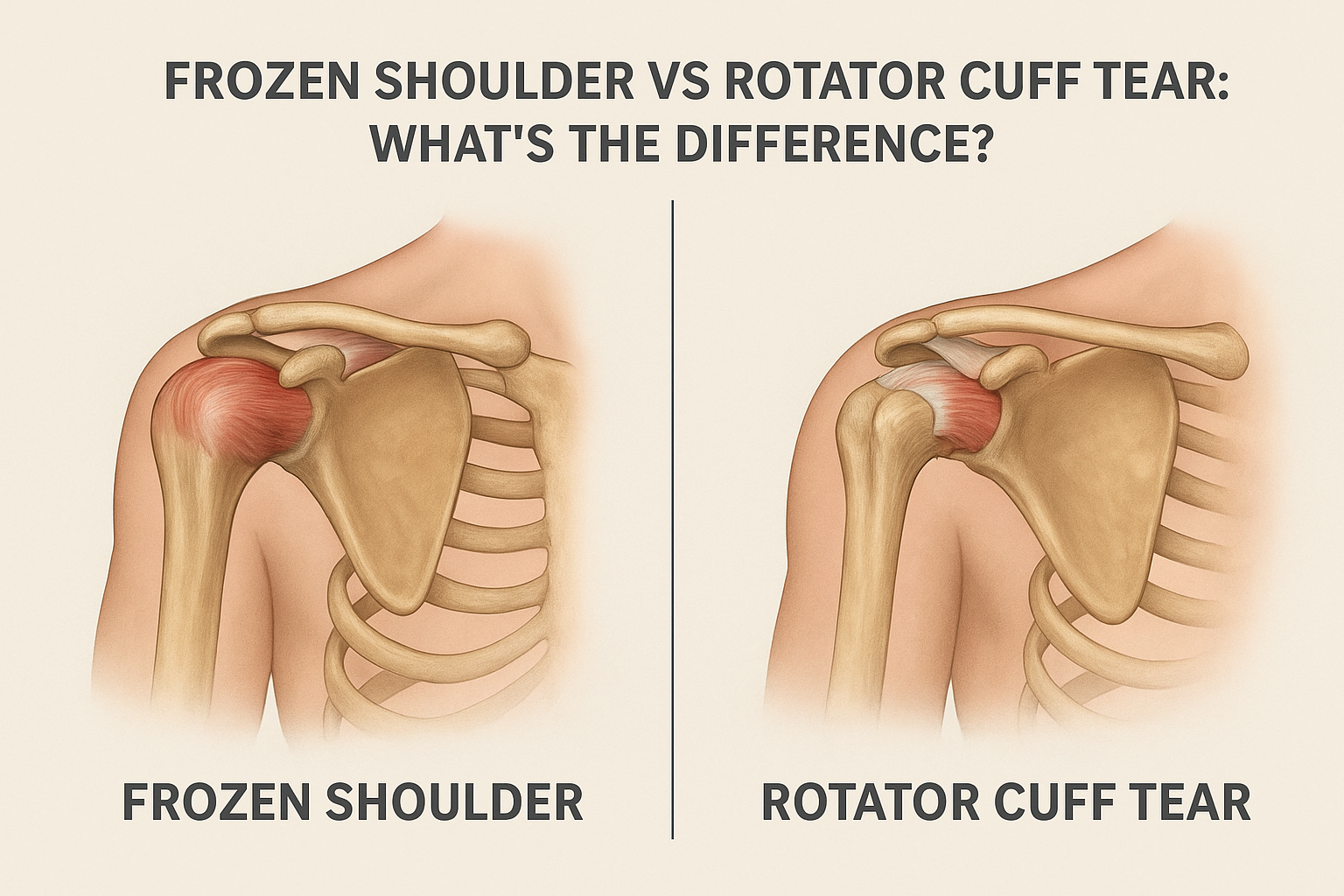
Shoulder pain can disturb your daily activities like lifting, combing hair, or reaching overhead. Two common shoulder issues are Frozen Shoulder and Rotator Cuff Tear. Though the symptoms may appear similar, their causes, diagnosis, and treatment are very different. Understanding the difference helps you get the right treatment at the right time.
What is Frozen Shoulder?
Frozen Shoulder, also called Adhesive Capsulitis, is a condition where the shoulder capsule becomes stiff and thick. It gradually leads to severe pain and limited mobility. It usually develops slowly and passes through three phases – freezing, frozen, and thawing.
Common Symptoms
Pain at night or while resting
Progressive stiffness
Difficulty in everyday movement
Risk Factors
Diabetes
Thyroid disorder
Prolonged immobilization after injury or surgery
Age 40–60 years
What is a Rotator Cuff Tear?
The Rotator Cuff is a group of four muscles and tendons that stabilize the shoulder. When a tendon is damaged due to injury or degeneration, it leads to a tear.
Common Symptoms
Sharp pain during lifting or rotation
Weakness in shoulder
Clicking sound while moving arm
Difficulty lifting objects
Causes
Sudden trauma like a fall
Overuse in sports
Age-related tendon wear
Poor posture
Key Differences: Frozen Shoulder vs Rotator Cuff Tear
| Feature | Frozen Shoulder | Rotator Cuff Tear |
| Onset | Gradual stiffness | Sudden weakness |
| Pain Type | Constant dull pain | Sharp pain during movement |
| Movement | Restriction in all directions | Pain on specific directions |
| Imaging | MRI shows thick capsule | MRI shows tendon damage |
| Treatment | Physiotherapy, injections | Physiotherapy, surgery if severe |
Diagnosis and Treatment Options
Doctors perform a physical exam and imaging tests like X-Ray, Ultrasound or MRI Scan to identify the condition.
Frozen Shoulder Treatment
Heat therapy
Physiotherapy exercises
Anti-inflammatory medication
Steroid injections
Arthroscopic release (in severe cases)
Rotator Cuff Tear Treatment
Rest and activity modification
Strengthening therapy
PRP injections
Arthroscopic tendon repair for large tears
Prevention Tips
Maintain good shoulder posture
Regular stretching exercises
Avoid lifting heavy weights overhead
Treat minor shoulder pain early
Strengthen shoulder muscles
When to Seek Expert Help?
If shoulder pain persists for more than 2–3 weeks or you notice sudden weakness, consult a specialist immediately. Early diagnosis prevents complications and improves outcomes.
Conclusion
Frozen Shoulder mainly causes stiffness while Rotator Cuff Tear causes weakness and sharp pain. Accurate evaluation is crucial for proper treatment.
Consult our Dr. Abhishek Barli – Best Orthopedic Surgeon in Hyderabad for expert guidance and quick recovery.