When a bone breaks, your body immediately starts a natural repair process. Blood clots form around the break, new bone tissue begins to develop, and gradually the bone remodels itself to regain its original shape and strength.
This process usually takes 6 to 12 weeks, depending on the location and severity of the fracture.
However, sometimes the healing process is disrupted or incomplete. This is where complications like nonunion or malunion can occur.
🔹 What Is a Nonunion Fracture?
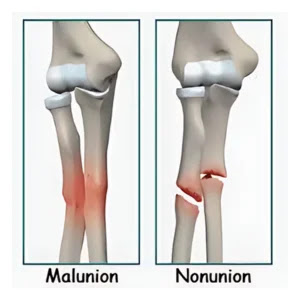
A nonunion fracture occurs when a broken bone fails to heal completely after an extended period, even with proper medical treatment.
In a nonunion, the two ends of the broken bone don’t join together, leaving a gap or instability in the bone.
What are the Common Symptoms of Nonunion?
- Persistent pain at the fracture site
- Swelling and tenderness
- Limited movement or inability to bear weight
- Feeling of instability around the affected area
- Visible deformity in some cases
What are the Types of Nonunion?
- Hypertrophic Nonunion:
The bone attempts to heal but lacks stability or fixation. The body produces callus, but it cannot bridge the fracture gap. - Atrophic Nonunion:
There’s little or no biological activity at the fracture site, meaning poor blood supply or soft tissue damage prevents healing. - Oligotrophic Nonunion:
The fracture shows minimal callus formation due to poor alignment or internal fixation.
🔹 What Is a Malunion Fracture?
A malunion fracture occurs when a broken bone heals in the wrong position. The bone unites, but it’s either rotated, shortened, or angled incorrectly.
What are the Common Symptoms of Malunion?
- Visible deformity or crooked appearance of the bone
- Limited range of motion
- Pain during movement
- Difficulty performing daily activities
- Shortened or twisted limb appearance in severe cases
🔹 Causes of Nonunion and Malunion Fractures
Both nonunion and malunion can result from several factors.
1. Improper Immobilization
If the fractured bone is not properly aligned or stabilized, it may shift and heal incorrectly, causing malunion.
2. Poor Blood Supply
Blood flow is essential for bone healing. Conditions like diabetes, smoking, or severe soft tissue damage can reduce circulation, leading to nonunion.
3. Infection
An infection at the fracture site interferes with the healing process and weakens bone regeneration.
4. Severe or Open Fractures
High-impact trauma or open fractures have a greater risk of complications due to extensive tissue damage.
5. Inadequate Nutrition
Calcium, Vitamin D, and protein are vital for bone repair. Nutritional deficiencies slow healing.
6. Premature Weight-Bearing
Putting pressure on a healing bone too early can cause displacement or incomplete healing.
🔹 Risk Factors
Certain health and lifestyle factors increase the risk of nonunion and malunion fractures:
- Smoking and alcohol consumption
- Poor nutrition or vitamin deficiency
- Diabetes or thyroid disorders
- Long-term steroid use
- Obesity
- Inadequate post-surgical care
🔹 Diagnosis
Accurate diagnosis is key for proper treatment. An orthopedic specialist will evaluate your symptoms and medical history, followed by:
1. X-rays – To assess bone alignment and healing progress.
2. CT Scan – To view detailed 3D images of bone healing.
3. MRI – To evaluate soft tissue and blood supply around the fracture.
4. Blood Tests – To check for infection or underlying health conditions.
🔹 Treatment for Nonunion Fractures
Treatment aims to stimulate bone healing, stabilize the fracture, and restore function.
1. Bone Stimulation Therapy
Electrical or ultrasound bone stimulators can help trigger the healing process in early nonunion stages.
2. Bone Grafting
A surgical procedure where bone tissue (from the patient’s own body or a donor) is placed at the fracture site to promote new bone growth.
3. Internal Fixation Surgery
Metal plates, screws, or rods are used to stabilize and align the bone for proper healing.
4. External Fixation
A frame or device outside the body holds the bone in the correct position while healing occurs.
5. Biological Enhancements
Growth factors, stem cell therapy, or platelet-rich plasma (PRP) can accelerate bone regeneration.
🔹 Treatment for Malunion Fractures
Malunion treatment depends on the degree of deformity and functional impairment.
1. Corrective Osteotomy
The bone is surgically cut and realigned to restore its natural shape. Plates or rods are used for fixation.
2. Bone Lengthening Procedures
Used when bones have shortened during healing, typically done with external fixators like the Ilizarov frame.
3. Joint Realignment
If the malunion affects joint movement, surgical realignment may be performed to restore balance and function.
4. Rehabilitation and Physiotherapy
Post-surgery, physiotherapy plays a vital role in regaining strength, flexibility, and mobility.
🔹 Recovery and Rehabilitation
Recovery time varies depending on the severity of the fracture and the treatment performed.
- Nonunion correction: 3–6 months of healing
- Malunion correction: 6–12 months of rehabilitation
During recovery:
- Regular follow-up X-rays ensure proper healing.
- Physiotherapy helps restore range of motion and muscle strength.
- Nutritional supplements like calcium and Vitamin D support bone regeneration.
- Avoid smoking and heavy activity until advised by your doctor.
🔹 Preventing Nonunion and Malunion
While not every complication can be avoided, these preventive measures reduce risk:
- Get timely orthopedic evaluation for all fractures.
- Follow immobilization and rest instructions strictly.
- Avoid early weight-bearing after surgery.
- Maintain a balanced diet rich in calcium and vitamin D.
- Manage diabetes or chronic diseases properly.
- Refrain from smoking and alcohol.