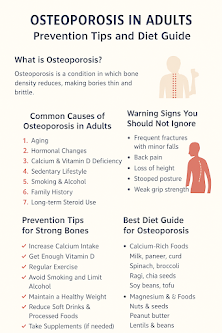
Osteoporosis is a condition where bones become weak, fragile, and more likely to break. It is often called a “silent disease” because most people don’t notice symptoms until a fracture occurs. With increasing age, lifestyle changes, and nutritional deficiencies, osteoporosis is becoming common among adults—especially women after menopause.
🔍 What is Osteoporosis?
Osteoporosis is a condition in which bone density reduces, making bones thin and brittle.
Common fracture areas include:
- Hip
- Wrist
- Spine
- Shoulder
Early detection and prevention can significantly reduce long-term complications.
🦴 Common Causes of Osteoporosis in Adults
1. Aging
Bone density decreases naturally with age.
2. Hormonal Changes
Lower estrogen in women and low testosterone in men increase risk.
3. Calcium & Vitamin D Deficiency
Poor intake leads to weak bones and slow healing.
4. Sedentary Lifestyle
Lack of exercise speeds up bone loss.
5. Smoking & Alcohol
Both reduce bone-building ability.
6. Family History
Genetics play a major role.
7. Long-term Steroid Use
Medications like corticosteroids weaken bones.
🚨 Warning Signs You Should Not Ignore
Although osteoporosis has no early symptoms, look for:
- Frequent fractures with minor falls
- Back pain
- Loss of height
- Stooped posture
- Weak grip strength
If you notice these signs, consult an orthopedic specialist for a bone density test (DEXA Scan).
🛡️ Prevention Tips for Strong Bones
✔ 1. Increase Calcium Intake
Adults need 1000–1200 mg of calcium per day.
Sources include:
- Milk, curd, cheese
- Ragi, almonds
- Green leafy vegetables
- Sesame seeds (til)
- Fortified cereals
✔ 2. Get Enough Vitamin D
Vitamin D helps absorb calcium.
Sources:
- Sunlight (15–20 mins daily)
- Eggs
- Fish (salmon, tuna)
- Supplements (only on doctor’s advice)
✔ 3. Regular Exercise
Weight-bearing exercises stimulate bone growth:
- Walking or jogging
- Skipping
- Stair climbing
- Strength training
- Yoga for flexibility and balance
✔ 4. Avoid Smoking and Limit Alcohol
These weaken bone strength and slow healing.
✔ 5. Maintain a Healthy Weight
Being underweight increases fracture risk.
✔ 6. Reduce Soft Drinks & Processed Foods
High phosphorus and sugars reduce calcium absorption.
✔ 7. Take Supplements (if needed)
- Calcium
- Vitamin D3
- Magnesium
- Omega-3
Consult your doctor before starting supplements.
🥗 Best Diet Guide for Osteoporosis
- Milk, paneer, curd
- Spinach, broccoli
- Ragi, chia seeds
- Soy beans, tofu
- Almonds
Vitamin D-Rich Foods
- Egg yolks
- Fortified milk
- Mushrooms
- Fish
Magnesium & Zinc Foods
- Nuts & seeds
- Peanut butter
- Lentils & beans
Protein-Rich Foods
Protein is essential for bone repair:
- Chicken, fish
- Eggs
- Dal, chana, rajma
- Greek yogurt
Foods to Avoid
- Excess salt
- Soft drinks
- Alcohol
- Deep-fried foods
- Packaged snacks