

Have you been experiencing stiff and painful joints that won’t loosen up even after waking up? Do your hands been experiencing swelling and pain, especially in the morning? These could be signs of early rheumatoid arthritis symptoms and could result in serious joint damage if left untreated.
Rheumatoid arthritis (RA) is a chronic autoimmune disorder that affects millions of people worldwide. Unlike osteoarthritis, which is caused by wear and tear, rheumatoid arthritis is caused by the body’s immune system attacking healthy tissues in the joints, leading to joint inflammation, pain, and damage.
As an orthopedic surgeon with over 3,000 successful joint surgeries, seen how early detection and the right rheumatoid arthritis treatment plan can make a profound difference in a patient’s quality of life. This guide will help you understand the rheumatoid arthritis symptoms you should be aware of, the causes of this condition, and the treatment options available.
What Is Rheumatoid Arthritis?
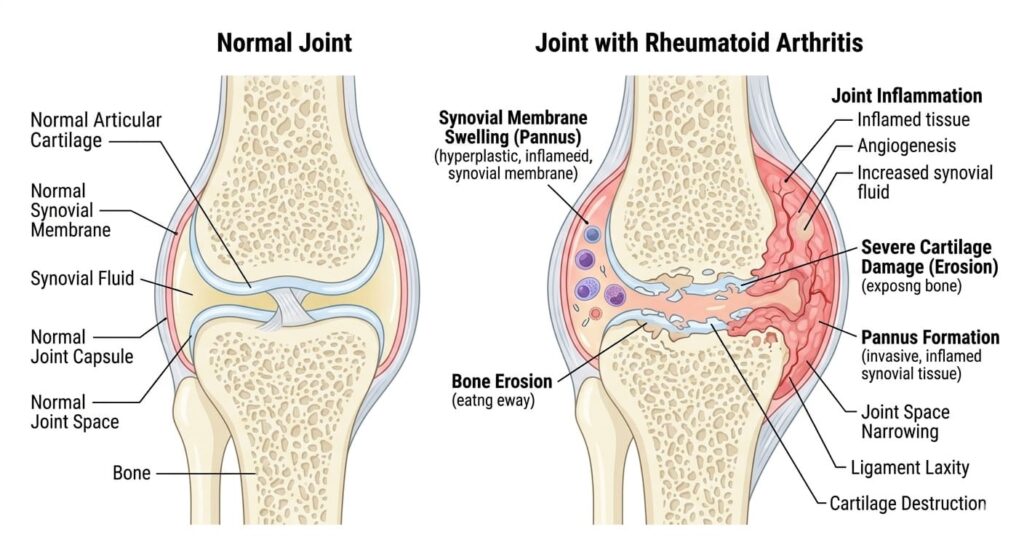
Rheumatoid arthritis is a systemic autoimmune disorder that mainly affects the synovial membranes of the joints. The immune system, in this case, produces antibodies that attack the joints, resulting in chronic inflammation of the joints, cartilage destruction, and eventually bone damage if left untreated.
RA usually affects the small joints of the hands, wrists, and feet. However, it may also affect the larger joints of the body, such as the knees, hips, and shoulders. In severe cases, if left untreated, it can lead to joint deformity and permanent disability. This is why it is essential to have proper rheumatoid arthritis diagnosis and treatment.
Early Signs of Rheumatoid Arthritis You Should Never Ignore
Identifying the early symptoms of rheumatoid arthritis can literally save your joints and your mobility. Many patients with rheumatoid arthritis will ignore the early symptoms of the disease, mistaking them for general fatigue or aches and pains. Don’t make that mistake.
The following are the most common early symptoms of rheumatoid arthritis:
- Morning stiffness lasting more than 30 minutes – one of the hallmark rheumatoid arthritis symptoms
- Painful, warm, or swollen joints – particularly in the fingers, wrists, and knees
- Symmetrical joint pain – if one knee hurts, the other is usually affected too
- Continuous fatigue and unexplained tiredness
- Low-grade fever and loss of appetite
- Rheumatoid arthritis swelling that appears and disappears in flares
- Reduced grip strength and difficulty carrying out everyday activities
If you are experiencing three or more of these early signs of rheumatoid arthritis consistently for more than six weeks, please do not wait. Early treatment is the single most effective tool in preventing long-term damage to your joints.

Rheumatoid Arthritis Causes: Why Does It Happen?
While the exact rheumatoid arthritis causes are not fully understood, research has identified several key contributing factors. RA is not caused by a single cause it is the result of a combination of genetic, environmental, and immune system-related factors.
1. Genetic Factors
People with a family history of RA are at higher risk. Some genes, especially the HLA-DRB1 gene, have been strongly associated with the development of rheumatoid arthritis. However, having this gene does not guarantee you will develop RA; it only makes you more vulnerable to it.
2. Autoimmune Dysfunction
The core of rheumatoid arthritis causes lies in how the immune system malfunctions. In RA, the immune system mistakenly identifies the synovium (joint lining) as a foreign threat and attacks it. This leads to chronic joint inflammation, cartilage breakdown, and eventually bone loss.
3. Hormonal Influence
It is observed that rheumatoid arthritis is two to three times more likely to occur in women than in men. It is seen that changes in hormones, especially during pregnancy and menopause, have an impact on rheumatoid arthritis symptoms. This shows that hormones have a major impact on the immune system.
4. Environmental Triggers
Smoking is considered one of the major environmental triggers for rheumatoid arthritis. Environmental factors such as exposure to air pollution, infection, and even physical and emotional stress are considered rheumatoid arthritis causes.These environmental factors can activate the disease in genetically predisposed individuals.
Rheumatoid Arthritis Diagnosis: How Is It Detected?
A timely and accurate rheumatoid arthritis diagnosis is the foundation of effective treatment. Unfortunately, many patients delay seeking help, which allows the disease to progress unchecked. There is no single test to confirm RA diagnosis involves a combination of clinical evaluation, blood tests, and imaging.
The main components of rheumatoid arthritis diagnosis are:
- Physical examination — assessing joint inflammation, tenderness, warmth, and range of motion
- Blood tests — Rheumatoid Factor (RF), Anti-CCP antibodies, ESR, and CRP levels
- X-rays and MRI scans — to detect early joint damage and bone erosion
- Ultrasound imaging — to visualise active joint inflammation and synovial thickening
An early rheumatoid arthritis diagnosis ideally within three to six months of symptom onset dramatically improves treatment outcomes. The aim is to reach remission or low disease activity before causing irreversible damage to the joints.

Rheumatoid Arthritis Treatment: What Are Your Options?
The good news is that rheumatoid arthritis treatment has advanced dramatically in recent years. With the right treatment plan, most patients can manage their symptoms effectively, slow disease progression, and enjoy a high quality of life. Rheumatoid arthritis treatment typically involves a combination of medication, lifestyle changes, physiotherapy, and in some cases, surgery.
1. Medications
Disease-Modifying Antirheumatic Drugs (DMARDs) like Methotrexate are the primary medications for rheumatoid arthritis. They function by reducing the excessive immune system activity. Biologic agents and JAK inhibitors are newer, targeted options for patients who do not respond to traditional DMARDs.
2. Physiotherapy & Exercise
Physiotherapy under guidance is very helpful in keeping the joints flexible and the muscles around them strong, thus reduce rheumatoid arthritis pain. Low-intensity exercises like swimming, walking, and yoga are very effective. It is important to keep moving because complete rest increases stiffness and inflammation of joints.
3. Lifestyle Modifications
Quitting smoking, keeping a healthy weight, eating an anti-inflammatory diet high in omega-3 fatty acids, and dealing with stress are all very important for reducing and controlling rheumatoid arthritis symptoms. Small lifestyle changes can have a surprisingly large impact on disease activity and joint health.
4. Orthopedic Surgery When Is It Needed?
When rheumatoid arthritis treatment with medications and physiotherapy is no longer sufficient and joint damage is severe orthopedic surgery becomes necessary. As an orthopedic specialist, I work with patients whose RA has progressed to the point where joint replacement surgery is the best path to restoring pain-free movement.
Surgical options for advanced RA include:
- Total Knee Replacement – for patients with severe knee joint damage caused by RA
- Hip Replacement Surgery – when rheumatoid arthritis in knees and hips causes debilitating pain
- Shoulder Replacement – for RA-related shoulder joint destruction
- Synovectomy – surgical removal of the inflamed joint lining in early to moderate RA

Rheumatoid Arthritis in Knees: A Special Concern
Rheumatoid arthritis in knees is particularly debilitating because the knee is a weight-bearing joint essential for walking, climbing stairs, and daily movement. Patients with RA in the knee experience persistent rheumatoid arthritis swelling, warmth, stiffness, and progressively worsening rheumatoid arthritis pain that can make even simple activities feel impossible.
Joint inflammation in the knee caused by RA erodes the protective cartilage layer over time, leading to bone-on-bone contact. If you notice persistent swelling, instability, or a grating sensation in your knee seek an orthopedic evaluation immediately. Early intervention can delay or even prevent the need for surgery.
Conclusion: Don’t Let Rheumatoid Arthritis Control Your Life
Rheumatoid arthritis symptoms can be frightening but they do not have to define your future. With early diagnosis and the proper treatment for rheumatoid arthritis, along with the guidance of an experienced orthopedic specialist, you can safeguard your joints and go on living a full and active life.
The most important step you can take today is to stop waiting. The earlier the early signs of rheumatoid arthritis are caught, the better your outcomes will be. Joint damage caused by RA is largely irreversible but it is also largely preventable with timely care.
If you are in Hyderabad and experiencing joint pain, Dr. Abhishek Barli at Yashoda Hospitals, Somajiguda offers expert orthopedic care.
📞 Consult Dr. Abhishek Barli Orthopedic Surgeon, Yashoda Hospitals, Somajiguda, Hyderabad
If you are experiencing joint pain, swelling, or stiffness don’t wait for it to get worse.
Book your consultation today and take the first step towards pain-free living.
📧 barliortho@gmail.com | 📱 +91 7095088055 | +91 99027 00992
Frequently Asked Questions (FAQs)
Q1. What are the first rheumatoid arthritis symptoms to look out for?
The earliest rheumatoid arthritis symptoms typically include morning joint stiffness lasting more than 30 minutes, symmetrical joint swelling (both hands or both knees), persistent fatigue, and low-grade fever. These early signs of rheumatoid arthritis often appear gradually over weeks or months.
Q2. Can rheumatoid arthritis be cured completely?
Currently, there is no complete cure for RA. However, with the right rheumatoid arthritis treatment, many patients achieve remission, a state where symptoms are minimal or absent. Early and aggressive treatment gives the best chance of long-term remission.
Q3. How is a rheumatoid arthritis diagnosis confirmed?
Rheumatoid arthritis diagnosis is confirmed through a combination of physical examination, blood tests (RF, anti-CCP, ESR, CRP), and imaging (X-rays, MRI, or ultrasound). No single test alone confirms RA, a combination of findings is needed.
Q4. When does rheumatoid arthritis require surgery?
Surgery is considered when medications and physiotherapy no longer control joint inflammation and pain and when significant joint damage has occurred. Joint replacement surgery, particularly knee or hip replacement, can dramatically restore mobility and eliminate rheumatoid arthritis pain in advanced cases.
Q5. Is rheumatoid arthritis in knees different from regular knee pain?
Yes. Rheumatoid arthritis in knees is caused by autoimmune joint inflammation, whereas regular knee pain is often due to injury or osteoarthritis. RA knee pain is usually symmetrical (affects both knees), associated with morning stiffness, rheumatoid arthritis swelling, and warmth, and is confirmed through blood tests and imaging.
Q6. What foods should I avoid with rheumatoid arthritis?
Patients with RA should avoid processed foods, red meat, refined sugars, and foods high in saturated fats as they can worsen joint inflammation. An anti-inflammatory diet rich in fruits, vegetables, whole grains, and omega-3 fatty acids (fish, walnuts, and flaxseed) helps manage rheumatoid arthritis symptoms naturally.